Showing posts with label London. Show all posts

Sunday, 25 March 2018

Counter Investigations: Forensic Architecture at the ICA


Legal cases usually allow both legal teams - prosecution and defence, in criminal cases - to examine and make use of the relevant evidence. But while governments have their own evidence-gathering experts and the money and knowledge to commission additional external expertise if needed, the people and organisations that might find themselves having to defend themselves against or challenge the state generally don't have access to these kinds of resources.

That's where Forensic Architecture comes in. It's an "independent research agency based at Goldsmiths, University of London", according to London's Institute of Contemporary Arts, which is showing an exhibition of the agency's work.

The ICA's website says: "Forensic Architecture is not only the name of the agency but a form of investigative practice that traverses architectural, journalistic, legal and political fields, and moves from theoretical examination to practical application."

Actually, if the exhibition is a reliable guide, then the agency practices very little architecture as most people would think of it, and really carries out research encompassing interviewing, forensic examination, reconstruction and - the area where architecture is most at play - digital and physical modelling.

They've been commissioned by non-governmental organisations and families to examine evidence relating to potential human rights abuses, crimes and state violence, including police killings, state airstrikes, and the EU's handling of the migrant crisis in the Mediterranean.

It's a fascinating subject for an exhibition, and the ICA devotes a lot of space to it, including multiple videos and charts and a recreation of the floor-plan of an internet cafe where a murder took place.

Eddy Frankel was fairly scathing in his review of the exhibition in Timeout, and he has a point when he says:

"All along the opening walls of this show are long, involved, mega-academic essays on the ‘forensics of aesthetics’ and shit like that. Is it a concession to the usual blah-blah waffle of the art world? Or is it simply an inability to condense down all the inward-looking, shoe-gazing academic theory at the heart of Forensic Architecture into something that can really connect with people? Probably a bit of both."

The section of the exhibition he highlights is interesting in flagging that aesthetics plays a part in courtroom presentations of forensic evidence even though evidence itself is supposedly straightforwardly factual, but it's a point that has minimal relevance to the case studies presented. There are also far more accessible ways of saying that the human body records evidence of the impacts of some of the things it experiences.

Furthermore, it's not always clear what, if anything, resulted from the agency's work. In some cases this is because the work is ongoing, but in others - such as the reconstruction of an airstrike - it seems to have been left out.

Likewise I had doubts about some of the findings. An increase in deaths in the Mediterranean is attributed to a specific cause, whereas it looked to me like it could have been due simply to the seasonal increase in attempted migrant crossings during the summer. A video is asserted to show a soldier pretending to discharge a shell from a rifle, when actually something that looks very much like a shell clearly ejects from the chamber.

But Forensic Architecture is, as I said, a fascinating agency that seems to help provide a counterpoint, in situations of a massive power imbalance, to the ability of governments to control the generation of evidence and expert analysis. And this exhibition provides a substantial, if at times somewhat confusing and frustrating, insight into how it does that.

It's well worth dropping by.

Wednesday, 14 March 2018

Review: Andreas Gursky at the Hayward Gallery

People at the exhibition

Art is at least as much about what's left out as what's included. A sketch of someone can be all the more moving for excluding their surroundings; a photograph can highlight neglected details by zooming in on parts of a whole.

This also mirrors how the human eye and mind work. Our eyes can focus on only one small area at once, while our brain generally limits our attention to what matters most at any given moment, filtering out the rest.

But this is not how the world really is, and that's part of the point of the Andreas Gursky works currently on display at London's Hayward Gallery.

Many of Gursky's works are very large, and depict monumental scenes of people interacting with their environment on an epic scale.

More than that, he uses post-production techniques to splice together multiple images of the same scene, so that he can capture and reproduce more of it - and all with the same sharpness of focus, rather than with any blurring, curving or fading away at the edges.

This is not how we perceive the world, and yet it represents the world as it really is. Objects we aren't focusing on at any given time don't really become blurry, just as background noise doesn't really reduce in volume as we eavesdrop on a particular conversation - it only seems that way to us. In reality these things carry on as before, just as big or small, just as important or unimportant, regardless of who's looking.

Similarly, the things that seem monumental to us are actually hardly any more or less so than the things that seem inconsequential. The different threads in a carpet, as depicted abstractly in one Gursky photograph, are barely any different in size to the glacier and mountains depicted in another if considered on the scale of subatomic particles or the distances between galaxies.

Even when Gursky takes more egregious artistic liberties, such as when he manipulates the capture of two Formula 1 pit crews to make the team members more multitudinous and their exertions seem simultaneous with each other, he gets closer to the real truth by doing so. A single snapshot of a pit stop wouldn't convey the frantic speed of the action or the competitive importance of it as brilliantly as the hyperreal, toyed-with version.

Gursky
In collapsing several moments and perspectives into a single work, like David Hockney did with his Polaroid collages, Gursky gets closer to the reality of multidimensional spacetime.

Hockney

Not that Gursky always wants to portray everything as it really exists in the world. His depiction of the Bahrain grand prix circuit chops the track up into multiple kaleidoscopic pieces that lead to nowhere, while the one of the pit crews intensely isolates the cars and people in a sea of black space like a computer game emphasising a highlighted character or object selection from an array of options.

But even here one could argue that Gursky is getting closer to the truth. Even if, in the real world, photons fall from the sun onto surfaces at the same rate regardless of what those surfaces are made of or how they got there, likewise raindrops and wind, and even if all materials are ultimately made up of the same subatomic stuff, the deeper truth is that some things are different by virtue of their origin or emotional resonances. A Formula 1 car is different to a mountain because of the thousands of hours of human effort and ingenuity that have gone into its design and manufacture, while a tarmac loop in the desert deserves attention for the sheer absurdity of its having been forced into being.

Gursky somehow captures that. One of the many things he does with his pieces - as well as documenting the interplay and mutual impacts of people and the environment - is make us think differently about the world and our place in it. And that, again, is what art - some great art, if not all - is about.

Saturday, 17 June 2017

Alien sculptures

There's an otherworldliness to the Ron Nagle sculptures currently being exhibited in the Amended Testimony show at the Modern Art gallery near Old Street in London.

Each of the twenty or so small works on display comprises at least one pocked, sedimentary, blocky chunk suggesting a segment of rock or slab of construction, and most also have an amorphous, smooth, shiny blob dribbling or oozing somewhere on or near the crusty part.

Eight-Track Mind, the piece that most captured my attention, also has a shaft a bit like a tree trunk, of a similar or the same texture as the block - blocks, actually, since there are two in this work:


All of the pieces are otherworldly, but Eight-Track Mind is the apotheosis of otherworldliness, like something seen through a tear in the fabric of the universe.

The ceramic blob, which swells pregnantly and precipitously on the edge of the uppermost epoxy resin block, seems somehow sentient, as though malevolently purposeful.

Meanwhile the shaft, which has a hint of having been amputated, damaged but not destroyed, seems - perhaps because of its grey-black colour and the way it's lit in the exhibition from above and behind - strangely incorporeal, like a projection or digital image. It's an other-dimensional presence in this otherworldly tableau, which is monumental despite its small size.

These two parts of the piece seem to be interacting, or about to interact: the blob radiating a kind of cold menace; the shaft like the embodiment of some mystical force with no say over its own use or abuse.

I've never felt so transported by a sculpture, or been so transfixed - although not actually fixed, since the piece encourages you to move around and view it from every possible angle, to better appreciate the suggestive bulging tension of the blob, the weird, eye-fooling texture of the shaft, and the changing relation between the two as your vantage alters.

I didn't want to leave the exhibition, and after I'd left I wanted to return. It's like Eight-Track Mind really is an alien artifact, able to lodge itself in your consciousness. It's invaded mine.

Monday, 13 March 2017

Book Review: Pour Me, AA Gill, 2015

Pour Me is short as memoirs go: just 241 pages. In part that's because, as Gill says early on in it, the alcoholism from which he suffered in his twenties meant that "there was no film in the camera" for those years, and that earlier memories were also dissolved: "childhood, school, holidays, friends ... all seemed to be faded and incomplete".

Incomplete, but not erased entirely: Pour Me does cover some of Gill's childhood, as well as the time between when he managed to stop drinking, aged 30, and when he wrote the book, 30 years later.

Stopping drinking saved Gill's life, and after "thousands of hours of learning the wrong thing" - art, cooking, gardening, bartending - he finally "failed into journalism", becoming one of the best-known food and TV critics in the country.

So I'll borrow a description of journalism that Gill says he liked - "journalism is what will be grasped at once" - and come to the point: Gill was a fantastic and endearing writer, and he had an interesting life. What more can you ask from a memoir?

He could be brilliant, as perhaps best demonstrated by the section on the speech he gave to a room full of dyslexic schoolchildren (he himself was dyslexic), telling them that the English language was theirs to manipulate no matter what their school might tell them about their abilities. This echoed two transformative elements in his own life: the moment when he came upon his English teacher literally tearing apart books to show them who was boss, and a crucifixion painting that particularly moved him with its depiction of human suffering, which was made in the period of the Lutheran reformation.

He was also enviably insightful - something he attributed to his artistic training ("It made me look, as opposed to merely see"). Consider for example this, from page 2: "I wonder what the rest of nature makes of a lawn? Arrogant, snobbish, entitled, needy, effortfully polite, sober." Or this, on famine (he wasn't just a critic), a subject that sadly is timely again: "It isn't staring into the face of starvation that thuds like a blow to your heart, it is having starvation stare back at you".

His turns of phrase were up there with the best of them, and he was funny, and he was empathetic, having experienced loneliness and sickness and desperation by the gallon.

I'm using the past tense, because Gill died in December 2016, a year or two after Pour Me was published. Could that be another reason why the book is so short? I'm not sure: it wasn't clear to me whether he'd received his diagnosis of terminal cancer before the book was finished.

I suspect not, because I suspect he'd have carried on writing it until the end if he'd known it was coming, just as he did with his articles, the last of which was about his experience of dying on the NHS. But then the book is so dense with insight and tales told only in snatches that it could easily have been four times the size, and the final paragraphs are filled with finality: "I misused a life for 30 years and I had 30 more of a second chance that I used better, though not as well as I might."

Perhaps those tales are told only in snatches here because they have already been told elsewhere - in Gill's journalism, a compendium of which is due to be published this year. I'll certainly be buying that too, so maybe I'll let you know.

Tuesday, 22 March 2016

Book review: How to Live in the City, Hugo Macdonald, Macmillan, 2016


There's a chapter in How to Live in the City called How to be Hard and Soft. I'd hoped before starting the book that this chapter might cover aspects of urban living that are seldom acknowledged, like whether it's a good idea to make eye contact with strangers, whether you should give money directly to people who beg you for it, whether you should respond to substanced-up geezers who start talking at you on the night bus, how you should deal with neighbours practicing their MCing at 4 in the morning, how not to be psychologically scarred when removing human shit from your doorstep, whether you should try to rouse the guy lying maybe lifelessly on the pavement at the end of your street, etc etc.

But How to Live in the City is a self-help book from the Alain de Botton-founded School of Life, and as such it's more concerned with things like - that old standby - how to retain your zen when your commute involves trying to avert your nose from the armpits of fellow tube-users, and how to find time for yourself when there's just so much to do.

To be fair, I should have guessed as much from the cover. And more importantly, HtLitC is framed in the context of not only the opportunities but also the costs of urban living, opening and closing with a quote that warns "big cities have difficulties in abundance".

But even if I shouldn't expect grit from The School of Life, it would have been nice to have more personality from Macdonald - or rather, from his writing, since he seems like an interesting bloke. His affable, at-times blog-like, writing makes HtLitC an easy read, but far from a distinctive one.

And though the advice seems largely sound, albeit geared towards the affluent, there's little in HtLitC that you won't already have read elsewhere or thought of yourself if you're at all reflexive.

That said, it rarely hurts to be reminded of good advice, and Macdonald is an agreeable enough benevolent spirit - and a well-read one, if a little too ready to recommend the works of former mentors and employers. It's hard to be too critical of a book that exhorts you to be a radiator of warmth rather than a drain of life, and impossible to dislike an author who uses an addendum to recommend both Madonna's Ray of Light album and Charlie Brooker's Black Mirror TV series - I hope at least a few of the book's target audience give that latter a try...

Besides, Macdonald seems better at life than me, so what do I know?

Saturday, 13 February 2016

More is less

Photo by Maciek Lulko

More London. Every day there's more London. Not in terms of area - nobody's reclaiming land from the Thames, Zuiderzee-style - but there's more to a city's size than its dimensions.

It's people I'm thinking of. A city is nothing without its people, and so more people means more city - and we all know London's population is growing daily. More London.

But London is also shrinking. Not in physical size, and not in density, but in another way: culturally and civically.

Every time another cultural space gets converted into a block of luxury flats, London gets a little smaller.

There is less physical area in a way: less space that isn't roped off for a select wealthy few. But the range of behaviours and freedoms of expression open to us also shrinks, making London that little bit less interesting, that little bit less ours.

It's ironic then that More London should be the name of the "visionary business development" on the south bank of the Thames, just west of Tower Bridge.

You probably know More London as the site of City Hall, the shiny glass building shaped like a motorbike helmet - or, to former London mayor Ken Livingstone, like a testicle. But there are 13 buildings in total, on 13.5 acres of land.

Why is the name of this "professionally managed, high quality estate" ironic? Because on this site, More very much means less.

Less freedom. Less democracy. Less community.

Exploring how More means less was the purpose of a guerrilla event called Space Probe Alpha that took place at More London on 13 February, without permission.

The brainchild of Bradley Garrett and Anna Minton, Space Probe Alpha was an opportunity to protest the creeping privatisation of public space in London and the UK more broadly. More than 100 people congregated on More London's private property, which runs right up to the banks of the city's greatest asset - the Thames - on land that offers views of Tower Bridge, HMS Belfast and the City, to hear from speakers such as Mark Thomas and Will Self about how this corporatisation is gradually diminishing the spaces in which public activity is constrained only by the law and allowing companies to impose their own rules.

It's not just antisocial behaviour that's being clamped down on. As I mentioned, More London is the site of City Hall, the seat of London's democracy. And what did members of the London Assembly find when they moved into their shiny new home in 2002? That they weren't allowed to be filmed for interviews outside it, former Deputy Mayor Jenny Jones told those gathered for Space Probe Alpha.

After much complaint, each political party was eventually given a single pass allowing them to be filmed on More London's land one at a time, but all other forms of commercial photography remain banned without prior permission. Skateboarding isn't allowed either, and you won't find many homeless people sheltering from the rain under More London's swooping arches.

As well as being educational, Space Probe Alpha was interventional: those in attendance were encouraged to take photos and sell them to each other for a penny a pop, in deliberate contravention of More London's rules. Throughout the event, More London's security guards watched on, occasionally joined by the odd policeman.

This event was allowed to proceed uninterrupted, but then it featured two peers and one of the UK's finest writers among its roster. Whether it would have been tolerated had such luminaries not been involved is anybody's guess.

What I do know is this: the more these kinds of spaces are allowed to proliferate, the less London belongs to the people who make it a place worth living in.

Saturday, 23 January 2016

Time and money

Since taking a big pay cut a little over a year ago, I've been keeping track of my spending much more closely.

After tax, rent and bills, I have about £7k left per year. That's about £20 a day, and £20 a day is how I think of it when I'm budgeting. Every day I wake up and add £20 to the running total of what I've saved - or subtract that amount from my arrears. Then throughout the day I subtract whatever I spend.
 
There are alternatives. I could do just one addition on January 1st and only subtractions for the next 365 days. But that would be hard to benchmark: I'd have to keep calculating how much I should have left at this time of year so that I could hold it up against what I actually had. It would also be depressing to watch my total do nothing but shrink for a whole year.

Or I could keep a running total like I do now, but add 83p every hour. That would be pretty labour-intensive though, and I'd be constantly forgetting my total.

So what I do is probably what most people in my position do. But there are consequences.

For example, for the most part I try to keep within my daily budget, only really letting that slide if I'm drinking. (Alcohol is so expensive it would be impossible to keep within my budget and stay out more than a couple of hours, so the budget goes out the window in favour of a vague attempt at not going TOO overboard.)

That means I tend to only buy things that cost about £12 or less - about the amount I have left per day after food and incidentals. Sensible you might think for someone without much money, but somewhat irrational given that I could equally well think of myself as having £40 for every 48 hours, or £140 for every week, the latter of which might make me feel free to buy anything up to about £80 so long as I bought nothing else non-essential that week. I could live like a monk for six and a half days, then splurge like a tourist in one orgiastic evening.

If I thought of myself as having 83p an hour, would I limit myself to frivolous purchases of only about 50p at a time - like cans of Coke and Kinder eggs? If by the minute, penny sweets?

If I lived by the year, would it be a big holiday?

By the lifetime, a car?

I don't know. I live by the day, so I spend my money on books, exhibitions and the occasional cake. I don't take holidays and I dress only in Christmas presents. I'm usually home by five on a Saturday.

How was your day?

Sunday, 27 December 2015

The freedom of the city

I love living in London, as opposed to the small-town-outskirts-turning-to-fields I grew up in. And even after more than eight years, I'm still discovering new reasons why.

I already knew I love the galleries, talks and other cultural events; the interesting buildings and amazing views; the possibilities and anonymity of massive crowds.

Today I added, while staring out the window of a rail-replacement bus service on the first leg of my journey back to London after Christmas: the physical freedom.

I realised that on some level I'd always thought a person's physical freedom to roam increases in proportion with the rurality of their surroundings. This probably came about because of notions like the freedom of the open road, adverts for offroaders and places like Ireland and the Scottish highlands, and received cultural wisdom like the desirability of Thoreau's great wilderness.

But it's bollocks. If anything, something like the opposite is true.

The fields around where I grew up are all farmland, meaning that they're private property: no trespassing is allowed. The roads around them offer few turnoffs, and what you find down those rare turnoffs is just more of the same, rendering your taking them pointless. Plus you need some kind of vehicle, or at least a bike, to get around them: the drab fields go on forever.

It's slightly better in the suburbs, but even there all roads only lead to houses, commercial property or dead ends. You probably can go down most of them, but chances are someone will want to know why, or you'll find nothing worth seeing anyway.

Compare that with cities. OK, the majority of the land in cities is increasingly owned by corporations or oligarchs, but at least you still have the freedom to wander it, and what you find at the end of one street might be just another street, but it might be a nice church, a soaring glass edifice, a tiny crooked alleyway, a public park, a river, a surprise square, a set of steps or any number of things you'll more than likely be free to explore as much as you like.

I live on the border of zones 2 and 3 in London, and within minutes of leaving my (admittedly shared) flat for a run, I can be passing nightclubs and 20-story buildings, ducking under a railway overpass and then joining a canal for a few kilometers before hitting, if I have the stamina, a massive public park. Or I can take a different route down to the river, or I can head north for views of the whole city...

Or if I'm out for a walk, I know I'm guaranteed to find streets I haven't walked before, and down them surprises I'd never even suspected.

It's not just London: Copenhagen a few weeks ago was the same, and I'm sure Amsterdam, New York, Toronto, Delhi, Mexico City or any city would be likewise.

Probably national parks offer the ultimate in physical freedom, but how many of us can live within easy reach of one? And by easy reach of one, I don't mean a 30-minute drive.

Outside of national parks on one's doorstep, it's cities that offer the freedom to roam. The suburbs stifle.

Saturday, 28 February 2015

Pastel highlights

Some highlights from the Mall Galleries' 2015 Pastel Society Annual Exhibition:

Tom Walker's Still Life With Exploding Glass, which manages to take a collection of familiar still-life objects and transform them into both a spectral terrestrial landscape and a drifting celestial goody bag.


Simon Page's The Black Dog, which combines warm yellows and cosiness with unsettling aquamarine and red, strange angles and an unusual perspective to create a scene of ambiguous tension.


And finally Felicity House's Two Rooms, whose playful lines, bright sunlight and grandiose setting call to mind something like Jacques Tati's film The Illusionist, and which I badly wanted to buy.


The exhibition runs until 7 March. Take a spare few grand and a van with you.

Thursday, 26 February 2015

Iraqi Art of the Everyday

The Iraqi pavilion at the 2013 Venice Biennale was housed in a building on the bank of the Grand Canal that is usually a rentable home base for wealthier tourists: the Ca' Dandolo luxury apartment.

The spot was chosen by Tamara Chalabi, chair of the Ruya Foundation for Contemporary Culture in Iraq, who also commissioned the curator for the event. She picked Jonathan Watkins, Director of the Ikon Gallery in Birmingham, who had previously curated several large international exhibitions.

On 26 February Watkins gave a talk about his curation of the pavilion for the annual Mallowan Lecture (don't know) for the British Institute for the Study of Iraq at the British Academy in London.

Watkins decided to showcase artists still resident in Iraq, he told BISI, and whose art deals with issues of everyday life, rather than directly with conflict or politics. Everyone would know about that already, he figured.

He chose to leave much of Ca' Dandolo's furniture in place, partly so that people would feel comfortable hanging out there for hours at a time, and partly to show the everyday art in an everyday setting. He even went so far as to have a baker making and serving Iraqi tea and biscuits in the apartment kitchen for the duration of the event.

Two of the artists Watkins mentioned in his talk stood out.

First the cartoonist Abdul Raheem Yassir (whose work, now that I think about it, doesn't seem to fit with Watkins' description of being apolitical)


And second Akeel Khreef, who repurposes found detritus into useful and beautiful objects, like this table made from old bicycle parts (the tabletop is made from weaved old tires, the legs are forks and the feet are gears. I think the arches are mudguards):


The artists all visited the pavilion in Venice during the event... Not all of them returned to Iraq afterwards.

You can hear Watkins talking about his work on the pavilion here, and here you can read interviews with him and Chalabi.

Sunday, 6 April 2014

Pillow Fight Day ... the cushiony cudgel of ick

Yesterday was Pillow Fight Day in London. I had heard that the Fight was going to be cancelled, with TimeOut reporting the Greater London Authority as saying that the majority of Trafalgar Square would be fenced off at the scheduled hour for some (in)conveniently timed maintenance. Nothing to do with the reported £2000 clean-up cost from last year, of course...

However, I happened to be heading towards the National Gallery at 2.55pm, and found the Pillow Fight very much about to be taking place. There must have been a few thousand more people than normal sardined into the Square, a good few hundred of them armed with pillows, with dozens more streaming in every second from every direction, and those not holding pillows craning for a better view from every pole, fence and statue pedestal:

The Pillow Fight crowd - the fighters themselves were left of picture


I immediately abandoned all hope of visiting the Gallery, but stood and watched until the countdown hit zero and the feathers began to fly.

As I then wandered off in search of something I could do without having to force my way through a whirling, pumelling throng, two thoughts struck me.

The first was: how many new pillows would have to be bought for the commercial benefit of the Fight to pay for the cost of the cleanup? The cheapest pillow on John Lewis's website is £6, but presumably they sell out of those pretty quickly, even if they do judiciously stock up with extras for PFD.

However, as I headed away from the Square with the fighting still going on, plenty of people were still making their way in the opposite direction clutching pillows, eager to get involved, and I noticed that at least a few of them were holding pillows that were clearly not newly bought, but rather were marbled with antiquating cartographies of sweat and drool stains. Which prompted thought two: how much human and microbiological gunk are these pillows saturated with - said gunk soon to be battered over the heads of strangers and blasted into the air? If this story in the DM is to be believed, rather a lot.

Come to think of it, I do have a bit of a sore throat this morning...

Friday, 10 May 2013

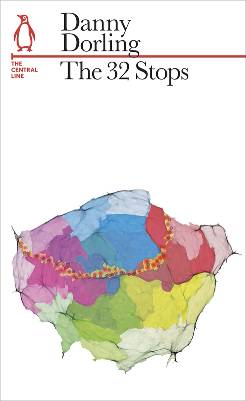
Book review: The 32 Stops - Danny Dorling (2013)


This is the second of the two books I bought from Penguin's set of twelve celebrating 150 years of London Underground. They're pretty little things. The other one I bought was A History of Captalism According to the Jubilee Line, which I very much enjoyed.

The 32 Stops is based around an unusual concept. Dorling takes you on a journey from west to east along the Central Line, but without actually descending underground; instead he character-hops a waking day at half-hourly intervals, giving you a few minutes with each person.
 
This he does using a wealth of real-life sources and statistics to present a snapshot of what life is actually like for people living beside that part of the Line. It's fact-based fiction as social commentary, played out along one of the city's main arteries.

It's an ingenious way of communicating a selection of socioeconomic statistics. I like a good geek out as much as the next blogger, but this is the first time I've ever put a book on this sort of stuff to the top of my reading list. A clever ploy.

And Dorling does a surprisingly good job of giving each new character or set of characters fairly unique circumstances. He is a Professor after all, not a novelist, and his characterisation is admirable, even if the writing itself is just a touch clunky at times.

It does get a little bit samey after a while though, as each inhabitation is too brief to delve deeply into the individual's circumstances. Wisely there's a non-fictional recap every four stops or so to tie together the disparate tales into a coherent thread, but it's still only a surface glimpse of the different layers.

Another minor complaint is that I found Dorling's politics took ever so slightly too forward a seat: the characters on the less enviable sides of the median lines are much more sympathetic than those on the other sides. That might be inevitable - I don't know how I would go about instilling sympathy for a dozen different well-to-do characters; you can't give them all cancer - but it was a weakness for me all the same.

(I suppose it's predictable that Dorling would be a lefty.  I wonder whether there are any conservative 'quantitative social geographers' out there?)

It's also a surprisingly depressing read. Real life, with its massive inequality and commonplace deprivation, dictates that many of the characters will be in difficult circumstances, but the bleakness is fairly unrelenting. Dorling also adds a further layer of complexity to the book by incrementally increasing the characters' age at each stop, so that a lifetime as well as a day is experienced across the journey as a whole. Although this is again ingenious, it amounts to an inexorable ride towards death through a multitude of lives filled with little more than constant worries about money and children. That is, it's a bit too realistic to be enjoyable as well as informative.

Still, overall The 32 Stops is an impressive accomplishment, and a credit to Penguin's bravery and powers of selection.

As I said, it's a lovely volume, but in case you don't like to fill your shelves with things both lovely and edifying, the thorough and at times rather witty notes include a link to a website currently under construction that looks as though it will soon provide an equivalent experience online. It too is already looking very snazzy:

http://www.londonmapper.org.uk/

I think I might buy more of the books though, personally.

Friday, 12 April 2013

The tube has no memory

I came onto the southbound Victoria line platform at Kings Cross at about 9.20 pm this Friday night. I thought I was too late to catch the tube train that was sitting there, because the doors near me were all closed, but then I noticed a commotion further along the platform that offered some hope.

Several Transport for London staff and maybe some transport police were standing half in and half out of the doors of one carriage dealing with some kind of situation, and as I approached I saw that the next set of doors further along the same carriage were also standing half open. Unlike other people hanging back on the platform, I slipped in...

The officials back along the carriage were in the process of deciding whether to detain some dude who was fervently protesting his innocence regarding whatever incident had taken place. I gained a picture of the scene in half-heard snatches as the staff rapidly made up their minds:

"I'm the victim in this!"

...
"Leave him alone!"
"You stay out of this!"
"I'm his mum! She bit him, he was just standing there!"
...

Within a remarkably short space of time, the officials made up their minds and withdrew, presumably with some female aggressor already in custody. With that, the familiar warning beeps sounded out and the carriage doors slid shut.

At this point the central part of the carriage was unnaturally empty of people. It wasn't entirely empty: there were the man and his mum, trying to pull themselves together, and one other young dude lounging back with his leg cocked nonchalantly over another seat, looking like he hadn't moved a hair during the whole goings on. And scattered across the floor of the carriage were the crushed remains of a burger and chips complete with decimated foam packaging, making the scene look like that of a low-end food fight gotten horribly out of hand.

The unfortunate young man was now examining an impressive instant bruise about the size of a £5 coin on his upper arm, having removed both a hoodie and a lightweight jacket to inspect the damage. The skin was scraped and ragged but looked unperforated, and there was no sign of extracutaneous blood.

I considered the situation. Both ends of the carriage were fully populated with seated people but largely empty of standees, whereas my central section was mostly empty of seated people but very crowded with somewhat shaken-looking standees. Reasoning that the danger was over, I excused my way through the crowd and sat down opposite the young man and his mother, just now themselves regaining their wits. One other man also took a perch at the far end of the section, but aside from he and I everyone else remained standing as the train pulled away.

I surreptitiously glanced at the man and his mother from time to time as the metres slid by. There were some quiet enquiries as to wellbeing from one to the other, but they were surprisingly low-key considering what had happened. The mother found or regained an Evening Standard from somewhere and directed the main force of her attention its way, although the hands holding it trembled. The son simply sat trembled and wondered where to look and what to do.

I looked at my feet, at the squashed chips, occasionally at the tube map and occasionally at the poor people opposite me and those still standing by the doors. Who knows what terrible scenes these people had witnessed, and why they were still so unwilling to sit down. Perhaps blood had been spilt after all - or not only spilt, but sprayed wildly across the seats, in Tarantino-esque reproduction of the ketchup smeared across the floor. I couldn't see any, though.

And then the tube reached Euston and the carriage doors opened and people embarked and, not knowing any reason not to, pushed past those still standing and filled the empty seats, pausing briefly at the sight of tattered foam and mashed potato, but not letting it stop them from claiming their deserved rest. A pack of teenage girls in skin-tight jeggings and faux-leather jackets squeezed on, squalling and laughing and drinking wine straight from a bottle, and suddenly they were the thing to contend with, the place not to look, the thing people wanted to be over.

When the man and his mum left the carriage at Oxford Circus, the only sign that anything had ever been amiss, aside from the stray chips and burger patty, came when the man who had perched on a seat when I took mine advised the fellow who had been bitten to perhaps see a doctor in the morning, to which the bitten murmured his quiet thanks.


The tube has no memory.

Tuesday, 12 March 2013

Book review: A History of Capitalism According to the Jubilee Line - John O'Farrell (2013)

This is one of 12 books written in celebration of 150 years of London Underground - one book for each tube line. They're beautiful volumes, but I couldn't afford to buy all 12, so after some slightly painful deliberation I settled for this and the one dedicated to the Central Line.

And O'Farrell's Jubilee Line offering is a dream - its title perhaps seems rather dry, but what lies inside is anything but. However, I don't want to give away any more than the cover already does, as the realisation of what the plot entails is the book's chief source of delight. Suffice it to quote O'Farrell's own description of his idea for the book: 'Das Kapital meets the Poseidon Adventure somewhere in Zone 2'.

The second greatest source of delight lies in how the plot unfolds, and the third in the fact that the plot is so dependent, factually speaking, on the Jubilee Line itself. That the book manages to be both informative and highly entertaining - the holy grail of reading - only adds to the pleasure.

I probably shouldn't set expectations too high, so I'll offset my praise by saying that I found the sendup of the tube a little cliched, and the comedy a little too reliant on farce for my personal taste. However, that's your lot: I'll nitpick no further, as I enjoyed ...Jubilee Line so much. Purchase a ticket and get on board!

Sunday, 10 March 2013

Book review: London: Bread and Circuses - Jonathan Glancey (2001)

It was interesting to read this book 12 years on from its first publication, but difficult for me fully evaluate it. It seems very much of its time with its frequent references to New Labour and Ken Livingston, now that Cameron and Boris are so firmly associated with current British and London politics. Also, I only moved to London in 2007, which leaves a 6-year gap between the book's contents and my beginning to pay attention to London life.

However, I feel I can quite safely say that it's not without its flaws. It's central premise - that New Labour distracted Londoners from their problems with baubles like the Tate Modern and the Millenium Dome and Bridge - may have had some grounding in truth, but Glancey doesn't make his case very well. It doesn't help that he seems to have a lot of liking for many of the eight such 'circuses' he highlights. One - the Canary Wharf underground station - he even finds to be an example of the well-designed public infrastructure projects that his book is a plea for: he pays homage to its "bravura, technical excellence and generosity". Elsewhere, the Royal Opera House revamp results in "a very gentle sequence of buildings knitted together to form a coherent whole", and the London Eye "offers millions of people the chance not just to see the sights, but to understand the ways in which London has grown and sprawled".

In addition, at times I struggled to pinpoint exactly those parts of the modern way of doing things that Glancey disliked, or what period or facets of the past he would like to return to. By the end of the book I'd come to appreciate that he has a fondness for the period from roughly 1930-1965, and for nationalised services, but the structure of his argument was not altogether coherent.

Finally in terms of negatives, Glancy struck me as being more than a little curmudgeonly in his fondness for the past and his dislike of the present: he dwelt overlong on good-old British-made buses for my interest - not surprising from someone who as a boy spent his time colouring in the streets of his London AZ blue if he'd walked them and red if he'd ridden a bus through them - and he seemed to have a bizarre aversion to sushi.

However, I also found much to like in this little book. For the most part it is very informative, interesting, and entertaining. Glancey includes some great stories from history, such as of the caretaker of St-Giles-without-Cripplegate exhuming the corpse of John Milton and charging members of the public to gawp. And he is at times very witty - "Want to make a crust? Why not dig up John Milton's corpse and show it about a bit?" - as well as eloquent - "From the top of the bar in Tower 42, you can't quite see to Russia, and you can't really see Spitalfields below you, but you can see across to the dark, winding ribbon of the Lea Valley. Fingers crossed that it doesn't light up with yet more finance industry guff..."

Also, the book boasts some great photos, especially considering it only cost me £7. One of the 1951 Festival of Britain is a particular highlight, but there's also one of the bust of Lenin that briefly adorned Finsbury, one of the Eye being lifted into position, and many more.

Overall, I enjoyed the book but wish it had been written in 2011 not 2001. I haven't looked up where Glancey can be found these days, but I will do so, and if he's still plying his trade I might well seek out more recent examples of his work.